
Fraud Allegation: Morgantown City Manager Kim Haws Ran Personal Business Inside City Hall, says city source. Were Taxpayers Defrauded?
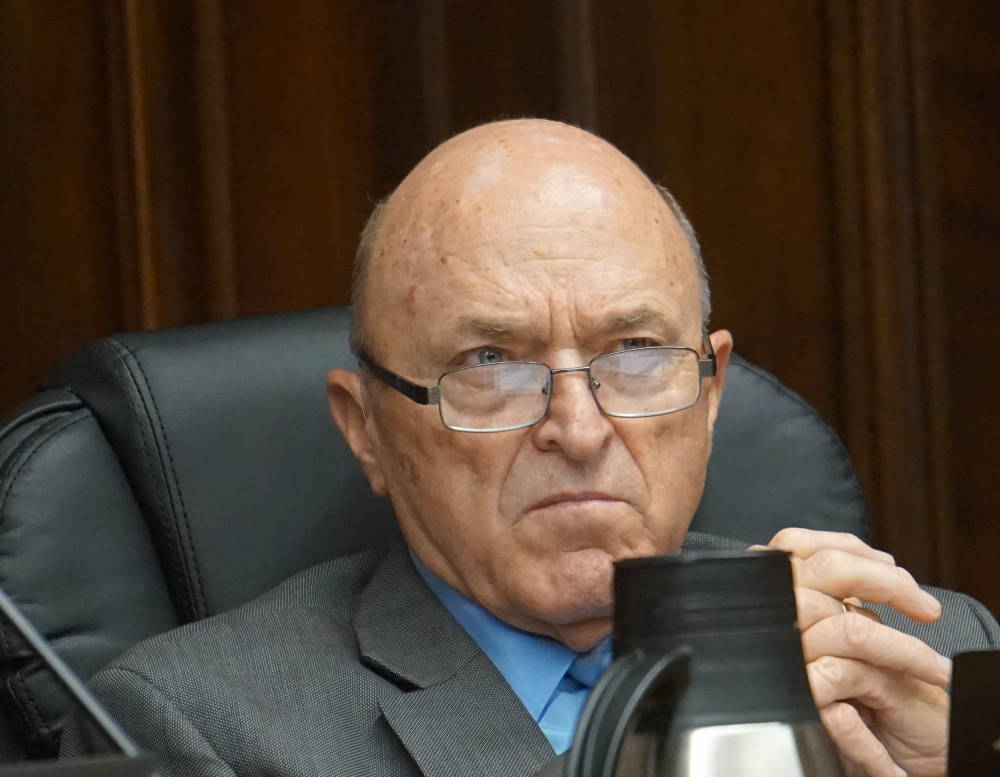
Former Morgantown City Manager Andro Kim Haws is facing accusations of using city hall to meet with private business clients instead of fulfilling his official duties—despite being paid to work for the Morgantown taxpayers.
The allegations emerged from a city employee who worked closely with Haws. This government staff member reportedly discovered that Haws had been conducting virtual “therapy” sessions with his patients inside a municipal building near the farmer’s market lot on Spruce Street. Public records confirm that Haws has been a licensed “counselor” in West Virginia since 2008. WVMAD shared an advanced draft of this story with the employee making these claims, and although no changes were requested, they did not elect to provide a public statement.
Before being hired by the City of Morgantown, Haws was dismissed from his role as City Manager of Bridgeport, WV, in early 2019. The Bridgeport Council voted 3-1 not to renew his contract, instead allocating $22,500 to an HR firm to search for someone else. Although Haws pleaded with council members to extend his two-decade reign, Bridgeport gave him the boot. Bridgeport Mayor Andy Lang refused to comment on Haws’ contract when asked by The Exponent Telegram in late 2018, stating, "It’s something I’d better not comment on right now." Lang indicated he would consult with the city attorney before issuing further remarks, but no follow-up was provided about what was discussed with the attorney.
Bridgeport Mayor Andy Lang and council members Jeff Smell, John Wilson, and Hank Murray—who voted to terminate Haws—were sent an advanced draft of this story last week and asked to comment on if they have knowledge Haws did anything wrong while in Bridgeport and why his contract was not renewed. Lang, Smell, Wilson, and Murray would not comment.
Haws assumed the role of Morgantown’s City Manager in 2020. Following anonymous tips, WVMAD launched an ethics investigation into Haws on July 24, 2024. Attempts to reach City Councilwoman Jenny Selin for comment on the allegations were unsuccessful last fall, as she never returned multiple calls and voicemails.
Then on September 19, 2024, Haws issued a press release on Morgantownwv.gov, announcing his forthcoming retirement. He was recently succeeded by City Manager Jamie L. Miller.
The West Virginia Board of Examiners in Counseling (WVBEC) is the agency responsible for therapist licensing and ethics in the state. Under WV Code §30-31, license holders like Haws are required to uphold a strict Code of Ethics and maintain "good moral character" with licenses granted only to those who merit "public trust." Becoming a licensed counselor is surprisingly easy, with requirements including having a master’s degree in a related field and passing a test of multiple choice questions.
WVBEC holds legal authority to discipline counselors who fail to comply with these requirements, which are designed to protect vulnerable mental health patients from unscrupulous practitioners.
Serious Questions About Andro’s Background
Haws maintained a profile advertising his services on BetterHelp, an online therapy platform that faces accusations of “poor and deceptive service,” according to a report by Distractify. Last year, BetterHelp paid a financial settlement to approximately 800,000 patients after dozens of complaints were filed with the Federal Trade Commission.
Several customer reviews on BetterHelp refer to Haws as a “Doctor,” yet WVMAD could find no evidence that he holds a doctorate degree.
Haws claims "40 years in practice" on his profile to attract therapy clients. While he has been a resident of West Virginia since 1999—when he was first hired as Bridgeport’s City Manager—state records show his Licensed Professional Counselor (LPC) license was only issued on April 11, 2008, while he was still employed in Bridgeport. That would equal approximately 16 years of experience, far short of the 40 years claimed.

Prior to his time in West Virginia, Haws lived in East Palestine, Ohio and Mesa, Arizona. However, searches of both states’ licensing databases—the Arizona Board of Behavioral Health Examiners and the Ohio Counselor, Social Worker, and Marriage & Family Therapist Board—found no records for Haws.
This raises an important question: where are the additional 24 years of professional practice experience that he claims? Could therapy patients have been misled?
WVBEC has investigative and subpoena power, with the ability to suspend licenses, issue disciplinary action, and even file state charges.
Additionally, Morgantown’s government could explore options to reclaim ill-gotten taxpayer funds if Haws indeed neglected his city duties. The taxpayer’s compensated Haws to the tune of $168,909 per year. However, initiating such an effort would require action from city council which previously failed to investigate Haws in 2022 when a former Morgantown police officer accused Haws of violating local law. Councilman Brian Butcher defended Haws at the time, saying he should take additional “security" measures.
We reached out to Haws to get his side of the story, using contact information he provided to WVBEC. No response has been provided to our email. To our surprise when calling the phone number for Haws’ therapy business, the voicemail was Haws’ former Executive Assistant with the City of Morgantown. WVMAD has since confirmed the phone number is an official government line, leading to even more questions about potential city resources being used for his private business affairs.
What do you think, Morgantown? Should allegations of corruption in the Morgantown government be swept under the rug?
Read Part 1 of this investigation series where Haws allegedly threatened a Councilwoman after she exposed his secret dirty contract.
Legal Disclaimer: We want to afford Andro what every American is entitled to under the Fifth Amendment of the U.S. Constitution. Andro Kim Haws is presumed innocent of all allegations and is not considered guilty of any wrongdoing unless proven so in a court of law by a judge and jury of his peers.